


Table of Contents
- Quick Comparison: 10 ACL Approved Bags for 2026
- ACL Cornhole Bag Certification Standards: What Qualifies
- 1. Custom Pro Snipers: Best for Competitive Control ($120)
- 2. Custom Elite Pro Sniper: Best for Elite Precision ($120)
- 3. Custom Surefire Elite: Best for Compact Hole-Friendliness ($120)
- 4. Custom Luciano: Best for Versatile Control ($120)
- 5. Custom Elite S: Best for Advanced Competitive Play ($120)
- 6. Custom Clover: Best for Hybrid Material Innovation ($120)
- How to Choose Professional Cornhole Bags: Beginner vs. Pro
- Maintaining Your Professional Cornhole Bags
- Frequently Asked Questions
Last Updated: September 14, 2026
Quick Comparison: 10 ACL Approved Bags for 2026
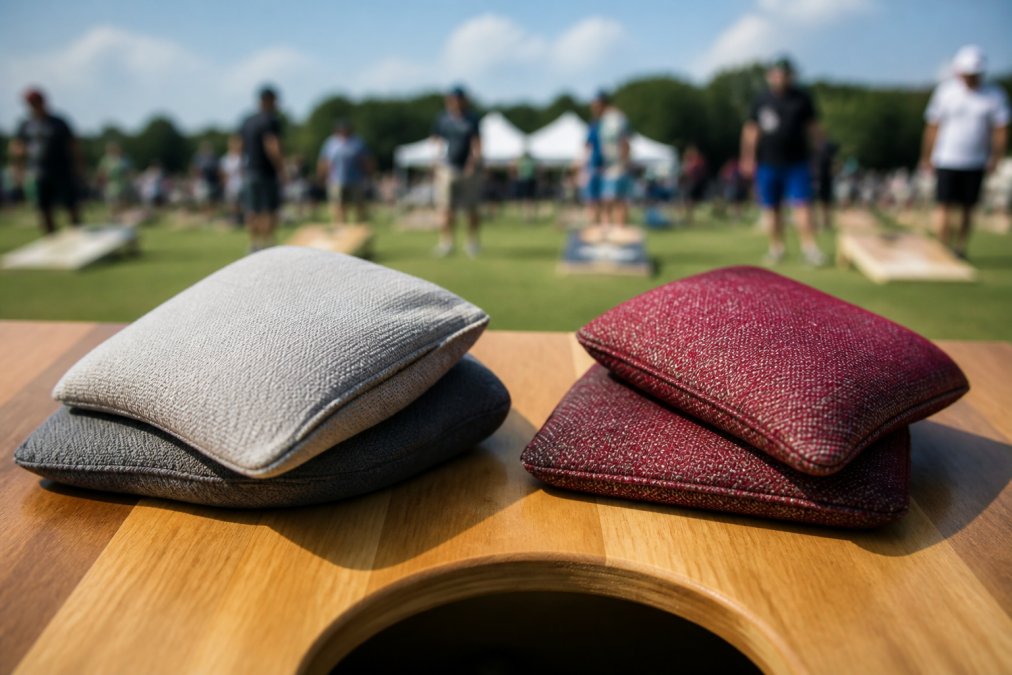
Every bag in this guide holds a 2026 ACL Pro Stamp. This list from Lucky Bags Cornhole covers ten tournament-ready options, all priced at $120, built for competitive players who need regulation weight, consistent resin fill, and predictable slide speed. Below, we break down speed ratings, fabric construction, and the use case each bag serves, so you can match a model to your throwing style.
| Bag | Speed Rating | Fabric | Best For |
|---|---|---|---|
| Pro Snipers | 6/9 | Dual polyester | Competitive control |
| Elite Pro Sniper | 6/9 | Dual-speed | Elite precision |
| Surefire Elite | 5/8 | Hybrid carpet | Compact hole-friendliness |
| Luciano | 5/8 | Herringbone carpet | Versatile control |
| Elite S | 6/9 | Hybrid carpet | Advanced competitive play |
| Clover | 5/9 | Custom hybrid | Hybrid material innovation |
ACL Cornhole Bag Certification Standards: What Qualifies
Most pages that sell tournament bags repeat the phrase "ACL approved" without explaining what the stamp certifies. This section covers the measurable standards a bag must clear for sanctioned play, and how to confirm a specific bag meets them.

ACL approval is a set of physical and material requirements, not a marketing badge. A bag sold as tournament-ready has to satisfy four categories of checks:
- Weight. Regulation bags target 16 ounces (1 pound), with a small manufacturing tolerance (Official Cornhole Rules by the ACO). Weight drives how the bag reacts off the board: a light bag skips and bounces, a heavy one sits down faster. That is why listings quote a gram figure (448 grams is the common pro-template weight) rather than just "16 oz."
- Size. Regulation bags are approximately 6 by 6 inches laid flat (Official Cornhole Rules by the ACO). Pro-template bags are cut slightly smaller than the recreational standard, which is why a "small professional template" appears in so many spec sheets, the smaller footprint is more hole-friendly without falling outside the size rule.
- Fill. Approved bags use synthetic resin fill rather than dried corn. Resin does not rot, does not attract pests, and holds its shape through repeated impact, which makes consistent slide speed possible across a set. Blended formulas mix pellet sizes so the bag settles evenly instead of clumping.
- Fabric behavior. Both sides are tested for grip and slide. That is what the speed rating (the "6/9" style numbers throughout this guide) describes: the first number is the slower, grippier side, the second is the faster, slicker side. A bag only earns approval if both faces perform within the tested range.
The American Cornhole League publishes its equipment requirements through ACL official rules and equipment standards, and any bag marketed as tournament-ready should reference a current-season stamp. Certification is renewed annually, so a 2026 stamp confirms the bag was tested against that year's specifications, not a prior year's.
How to Verify a Bag's ACL Approval
Verification takes under a minute and comes down to three checks:
- Find the physical stamp on the bag. It lists the approval year. The stamp is on the bag itself, not just the packaging or the product page.
- Confirm the weight and size against the regulation figures. A listed weight near 16 ounces (or a gram figure in the 448 range for pro templates) and a roughly 6-by-6-inch footprint are the baseline. If a listing is vague about weight, treat that as a red flag.
- Cross-reference the model against the league's current approved equipment list. A model name that does not appear on the current list is not legal for sanctioned play, regardless of what the product page claims.
The most common mistake is trusting a product page's "ACL approved" badge without checking the stamp year. An expired stamp means the bag is not legal for sanctioned play even if the design matches a certified model, the certification, not the construction, is what lapses.
What Approval Does Not Cover
Approval says nothing about whether a bag suits your game. Two bags can both carry a current stamp and behave completely differently, one a slow, grippy control bag, the other a fast push bag. Certification guarantees legality; the speed rating and template determine whether the bag helps you score. Read the stamp for compliance, then the speed rating for fit.
1. Custom Pro Snipers: Best for Competitive Control ($120)
The Pro Sniper is built for players who want control without sacrificing scoring power. Its 6/9 speed rating pairs a controllable slow side with a slick side that glides through traffic, giving you the precision to set blocks and the speed to push for big rounds. Premium blended resin fill keeps weight distribution even, and the smaller professional template makes the bag extremely hole-friendly. Lucky Bags Pro Snipers product page

2. Custom Elite Pro Sniper: Best for Elite Precision ($120)
Precision is the entire point of the Pro Sniper Elite. The 6/9 rating delivers a smooth medium grip on the control side for blocks and roll shots, while the slick side slides cleanly for hole-friendly pushes. Performance-blended resin gives a consistent feel, and the regular professional template suits players who prefer a roomier grip.
3. Custom Surefire Elite: Best for Compact Hole-Friendliness ($120)
Compact shapes win close games, and the Surefire Elite leans into that advantage. Built on the smaller professional template at 448 grams, it uses hybrid carpet materials for a 5/8 rating that balances control and finish speed. The hybrid control side handles finesse shots while the slick side slides predictably. Lucky's Signature Resin Blend keeps the feel consistent, making this a pick for advanced players who want a bag that melts into the hole.

4. Custom Luciano: Best for Versatile Control ($120)
Versatility defines the Luciano. Herringbone carpet gives the control side a grippy, consistent texture for blocks, rolls, and cut shots, while the slick side glides for clean pushes. At 448 grams with a 5/8 rating, it adapts across board conditions without forcing a change in release. The small professional template and Signature Resin Blend round out a bag for players who win with touch rather than pure aggression.
5. Custom Elite S: Best for Advanced Competitive Play ($120)
The Elite S takes the Pro Sniper Elite's DNA and shrinks it. A 6/9 rating blends a hybrid-carpet control side with a fast, hole-friendly slick side, giving command of every shot type. At 448 grams with performance resin fill, it delivers even weight distribution and a smooth, broken-in feel from the first throw. Advanced players who want a tighter profile without losing control will find the Elite S fits their game.
6. Custom Clover: Best for Hybrid Material Innovation ($120)
Material innovation is where the Clover separates itself. Its custom hybrid fabric, developed exclusively for Lucky Bags, produces a 5/9 rating that balances touch and speed: the control side grips for blocks and roll shots, while the fast side slides for smooth pushes. Premium blended resin and reinforced seams make it a durable option in the lineup, and the regular professional template suits players who want a confident grip.
How to Choose Professional Cornhole Bags: Beginner vs. Pro
Most buying guides assume you already know what you want. This one starts from the two decisions that determine whether a bag helps you: your skill level and your play style.
Step 1: Identify Your Play Style, Slide or Stick
Every approved bag has two faces, and the speed rating tells you how each one behaves. The lower number is the slower, grippier side; the higher number is the faster, slicker side. Your style determines which side you lean on.
- Slide players push the bag flat and fast, aiming to run it up the board and into the hole. They want a fast slick side, a 9 or close to it, because speed through traffic is how they score.
- Stick players throw a higher, flatter-trajectory bag that lands and holds, using the grippy side to block the hole and force awkward shots. They want a slower, tackier control side, a 5 or 6, because a bag that slides past the hole is a wasted throw.
- Hybrid players mix both, using the slow side for blocks and cut shots and flipping to the fast side for push attempts. A dual-speed bag with a wide spread between its two numbers (a 5/9, for example) gives a hybrid player the most options.
A quick self-test: if your best shots are the ones that run into the hole, you are a slide player. If your best shots are the ones that sit exactly where you aimed, you are a stick player.
Step 2: Match the Rating to Your Skill Level
| Skill Level | Recommended Speed Rating | Why |
|---|---|---|
| Beginner | 4/7 to 5/8 | The slower stick side forgives an inconsistent release and teaches you to keep the bag flat before you add speed. |
| Intermediate | 5/8 to 6/9 | Enough grip to place blocks, enough speed to start pushing for multi-bag rounds. |
| Advanced / Pro | 6/9 and faster | The slick side rewards a repeatable release with aggressive push shots and hole-friendly finishes. |
The logic: a beginner throwing a fast bag gets punished twice, once for the bad release, again for the speed that carries the mistake past the hole. A slow bag turns a slightly off throw into a near miss instead of a blowout. Advanced players have the opposite problem: a slow bag caps their ceiling because it cannot carry enough speed through a crowded board.
Step 3: Choose the Template
Template is the bag's footprint. Pro-template bags are cut slightly smaller than the recreational standard, making them more hole-friendly on a marginal throw. Regular-template bags offer a roomier grip, which some players prefer for a more confident release. There is no "better" template, only a better fit: if you struggle to find the hole, go smaller; if you struggle to grip the bag cleanly, go regular.
Step 4: Factor in Board and Weather Conditions
A bag that plays perfectly in a dry indoor venue can feel completely different outdoors in summer humidity. Carpet-textured control sides hold their grip longer on humid boards than standard polyester, which is why outdoor players often favor them. If most of your events are outdoors, choose a bag whose control side stays tacky when the board gets slick.
The Short Version
Beginners should start slow and grippy (5/8 or below) to build a flat, repeatable release. Intermediate players should move to a 5/8 to 6/9 spread once they can place blocks on command. Advanced players should pick a 6/9 or faster bag and choose the template that matches their grip. Pick the style first, the rating second, and the template last, that order keeps you from buying a bag that is legal, well-made, and wrong for your game.
Maintaining Your Professional Cornhole Bags
Maintenance protects both performance and certification. Rotate between two sets so no single bag carries all the wear, wipe fabric with a damp cloth rather than soaking it, and store bags in a dry bag away from direct sun to preserve weather-resistant coatings. Break-in matters too: most pro-grade bags settle into their true speed after a handful of sessions, so plan ahead rather than opening a fresh set on match day.
Choosing the right ACL approved bags comes down to matching speed rating and template to your release, and getting that wrong costs you points on the board. Lucky Bags Cornhole builds every model in this guide with ACL Pro Stamped 2026 certification, premium resin fill, and American-made craftsmanship, from the control-focused Pro Snipers to the fast, aggressive Celtics. With customizable designs, free ground shipping on orders over $400, and fast delivery, upgrading your setup is straightforward. Get started with Lucky Bags Cornhole and put championship-level equipment in your hands.
Frequently Asked Questions
What are the requirements for ACL approved cornhole bags?
ACL approved bags must meet specific standards for size, weight, and material. Regulation bags measure 6x6 inches and weigh 15-16 ounces. The ACL requires dual-sided fabric construction with distinct speed ratings, and bags must be stamped with the current season's approval mark, such as 2026 ACL Stamped. Manufacturers submit bags for testing to verify they meet these specifications before receiving certification.
How can I verify if a cornhole bag is ACL approved?
Check for the official ACL stamp on the bag itself, which indicates the season it was approved. For 2026, look for the 2026 ACL Stamped mark. You can also verify approval by checking the ACL's official equipment list or contacting the manufacturer directly for certification documentation. Reputable sellers like Lucky Bags Cornhole provide this information upfront.
Do I need ACL approved bags for local cornhole leagues?
Most local leagues follow ACL rules and require approved equipment for fair competition. Even if your league is casual, using ACL approved bags ensures consistent performance and prepares you for higher-level play. Some leagues may have their own equipment rules, so check with organizers. For backyard play, any bag works, but approved bags offer better durability and feel.
What bags do most ACL pros use?
Professional players favor bags with dual-speed fabric, typically a 5/8 or 6/9 rating, for control and hole-friendliness. Popular choices include Lucky Bags models like the Custom Surefire and Custom Pro Snipers, which are ACL approved and trusted by top competitors. Pros often customize their bags to match their throwing style and board conditions.
Where is the official list of ACL approved bags for the current season?
The ACL publishes an official equipment list on its website each season, detailing approved bags, boards, and accessories. For 2026, look for bags stamped with the 2026 ACL mark. You can also find this information through authorized retailers like Lucky Bags Cornhole, which clearly labels ACL-approved products in their catalog.