


Table of Contents
- Why Cornhole Bags Need a Break-In Period
- What You'll Need Before You Start
- Step 1: The Natural Break-In Method (Throwing)
- Step 2: How to Soften Cornhole Bags Without Damaging Them
- Step 3: Kneading, Massaging, and Soaking Your Bags
- How Long to Break In Cornhole Bags
- The Best Cornhole Bag Conditioner Options
- Material-Specific Break-In: Cotton Duck vs. Synthetic Resin
- Frequently Asked Questions
Last Updated: September 18, 2026
Why Cornhole Bags Need a Break-In Period
Brand-new cornhole bags rarely throw their best out of the box: the fabric is stiff, the fill sits tight, and the bag slides off your hand instead of gripping it. Breaking in cornhole bags means softening the fabric and loosening the fill so they play the way you want.
What You'll Need Before You Start
Most of what you need is already in your kitchen or garage:
- A clean bucket or large bowl
- Distilled white vinegar
- A washing machine and dryer
- A towel for drying
- A bag conditioner or toss sauce
- Your set of cornhole bags
Step 1: The Natural Break-In Method (Throwing)
The natural break-in method is the slowest but safest: throw your bags over and over until the fabric relaxes and the fill shifts into place. Most tournament players prefer it because it builds a bag that fits your hand and throw style, with no chemicals and no risk of damage. Throw from game distance and rotate all four bags evenly so they wear at the same rate.

How Many Throws It Actually Takes
There's no magic number, but most players notice a real difference after several hundred throws, with full break-in taking a few weeks of steady practice. Throw against a board rather than open air, impact loosens the fill faster than a soft toss.
Step 2: How to Soften Cornhole Bags Without Damaging Them
Heat, moisture, and motion soften cornhole bags fast, control all three so you don't wreck the fabric or fill. The washing machine and the vinegar soak both speed up break-in, and both can cause damage if you push too hard.
Washing Machine and Dryer Techniques
A cold wash on a gentle cycle is the safest machine method. Add a small amount of detergent; the agitation loosens the fabric and softens the fill. Then dry on low heat, never high, high heat can melt synthetic resin pellets and shrink cotton. Check every few minutes, pull them out slightly damp, and toss them to separate the fill.
Using Distilled White Vinegar for Softening
Distilled white vinegar is a favorite among experienced players because it softens fabric without leaving a chemical residue. Mix one part vinegar with a few parts water, submerge the bags for about 30 minutes, then rinse and dry on low heat.
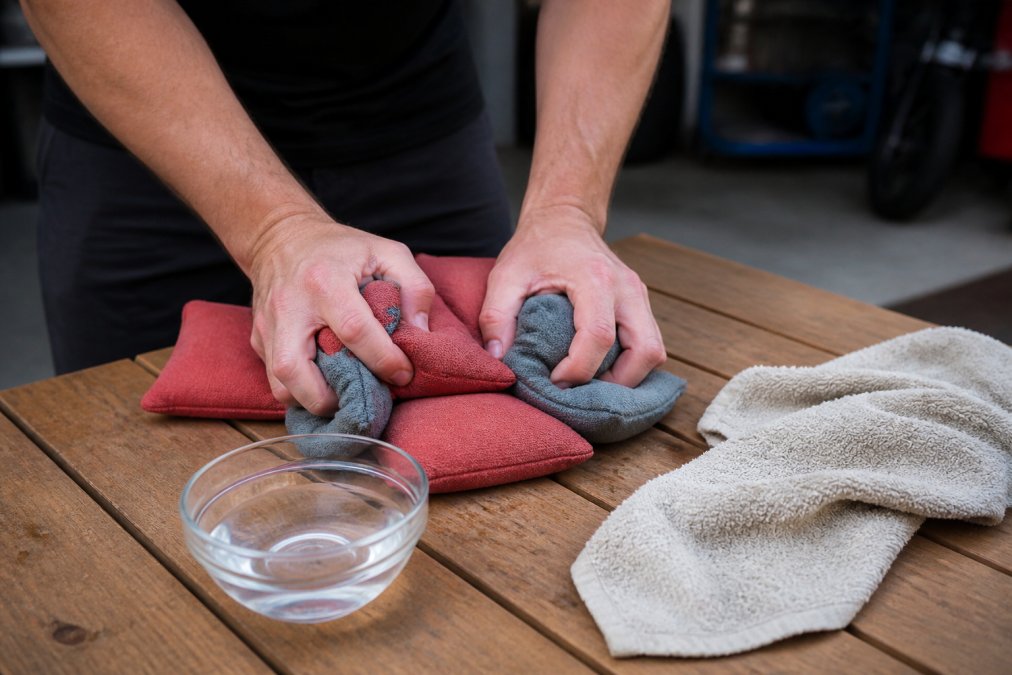
Step 3: Kneading, Massaging, and Soaking Your Bags
How Long to Break In Cornhole Bags
"Broken in" isn't a fixed state, it depends on your bag, your throw, and how picky you are about feel. What most players want to know is: how do I tell when I'm there, and how do I stop before I overshoot?
The Realistic Timeline
Most bags land in their sweet spot between one and four weeks of regular play. Machine and vinegar methods compress that to a few days, but also compress your margin for error. The variables that move the timeline:
- Face fabric. Cotton duck softens in days. Synthetic suede takes weeks of throwing because the nap has to flatten naturally.
- Fill type. Corn breaks down fast. Resin pellets need repeated impact to redistribute. Blended fills sit in between.
- Throw volume. A player throwing 200 bags a day breaks in a set far faster than a casual player throwing 50 a week.
- Board surface. Throwing against a finished board with a smooth face wears bags differently than throwing against raw plywood or into open air.
- Climate. Humid air keeps cotton slightly relaxed; dry air keeps it stiff. This is a real factor, not a myth.
How to Measure Progress (Not Guess)
Instead of counting days, track three things:
- Grip test. Pick up a bag with one hand and tilt it. A broken-in bag stays put. A new bag slides.
- Flop test. Hold a bag by one corner and let it hang. A new bag stays stiff and angular. A broken-in bag drapes and the fill settles toward the low corner.
- Fill distribution. Squeeze the bag flat. Hard clumps or a lumpy center mean the fill hasn't loosened; even, sandy resistance means you're close.
Run all three tests on all four bags at once. If one bag feels noticeably different, it's under- or over-broken and will throw differently in a game.
Initial Break-In vs. Long-Term Maintenance
This is the distinction most guides blur, and it costs players money.
Maintenance rules once a bag is broken in:
- Spot-clean with a damp cloth instead of washing.
- Air-dry instead of machine-drying.
- Knead only to redistribute fill, not to soften further.
- Rotate all four bags evenly so they age together.
- Retire a bag when the seams fray, the fill clumps permanently, or the fabric tears, not when it feels "too soft."
When to Stop
Stop breaking in a bag when it passes all three tests and feels consistent with its three siblings. Pushing past that point doesn't make a better bag, it makes a shorter-lived one.
Timeline at a Glance
| Method | Typical Time | Best For | Risk Level |
|---|---|---|---|
| Natural throwing | 1-4 weeks | Tournament players, suede faces | Low |
| Washing machine (cold, gentle) | 2-5 days | Cotton duck, fast results | Medium |
| Vinegar soak | 1-3 days | Cotton duck, even softening | Medium |
| Kneading by hand | Ongoing | Fine-tuning feel | Low |
| Conditioner soak | About 1 hour | Fast track to 80-85% break-in | Medium |
The Best Cornhole Bag Conditioner Options
A good conditioner speeds up break-in and adds consistency, softening the fabric and helping the fill settle faster than water alone.
Material-Specific Break-In: Cotton Duck vs. Synthetic Resin
Most guides hand you one generic routine and hope it fits your bags. It won't. The fabric face and the fill decide which methods are safe, how fast the bag breaks in, and what permanently ruins it. Match the method to the material and you skip the most expensive mistakes.
Cotton Duck (10 oz-12 oz woven canvas)
Cotton duck is the traditional cornhole fabric: a tight plain weave that starts stiff and slick, then softens into the grippy, floppy feel most players want.
What works:
- Moisture + gentle heat. Cotton fibers relax when wet and hold that relaxed shape as they dry. A cold gentle wash or a 30-minute distilled white vinegar soak both work.
- Mechanical working. Kneading and throwing accelerate the process because the weave physically loosens.
Protocol:
- Cold water, gentle cycle, small amount of mild detergent. No bleach, no fabric softener.
- Tumble dry on low heat only. Check every 5 minutes.
- Pull bags while slightly damp and knead the fill toward the corners.
- Air-dry the rest of the way.
Synthetic Resin Fill (plastic pellets)
Resin-filled bags use small plastic pellets instead of corn. The pellets are heavier and more consistent, but they don't soften with water the way corn does. They need motion, not moisture, to redistribute.
What works:
- Throwing and kneading. Repeated impact against a board is the primary break-in tool.
- Dry tumbling. A no-heat air-fluff cycle in the dryer loosens the pellets without risking the fabric.
Protocol:
- Skip the soak. Water does little for resin pellets and adds drying time.
- Throw against a board in focused sessions, 100-200 throws per session.
- Knead between sessions to spread pellets evenly.
- If you must machine-dry, use air fluff / no heat only.
Synthetic Suede and Canvas Blends
Many modern bags use a synthetic suede face (often microfiber polyurethane) stitched to a canvas back. These are the most common tournament bags and the most misunderstood.
What works:
- Surface breaking, not soaking. The suede side breaks in by being thrown and handled, the nap flattens and the fabric gains grip.
- Light moisture on the canvas side only if the manufacturer allows it. Many suede faces are treated and will spot or stiffen if soaked. Consistent friction remains the most reliable method for softening fibers, a principle that applies equally well when breaking in leather materials for other precision equipment.
Protocol:
- Throw. That's the primary method. Suede-faced bags typically need 300-500 throws to feel right.
- Wipe, don't soak. A damp cloth on the canvas side removes dirt without saturating the suede.
- Air-dry only. Heat can warp the suede face and discolor it.
The Fill Matters as Much as the Fabric
Here's the part most guides skip: two bags with identical cotton duck faces can break in completely differently depending on what's inside.
- Corn fill softens fast because the kernels break down and shift, but it wears out faster, corn can mold if it stays wet and loses volume over a season of heavy play.
- Resin fill lasts longer and holds its weight, but needs more patience and motion to loosen.
- Blended fills (corn plus resin) split the difference: faster break-in than pure resin, longer life than pure corn.
Quick Reference
| Material | Primary Method | Heat Tolerance | Time to Break In |
|---|---|---|---|
| Cotton duck + corn | Vinegar soak + low-heat dry | Low heat only | 3-7 days |
| Cotton duck + resin | Throwing + kneading | Low heat only | 1-3 weeks |
| Synthetic suede + resin | Throwing only | Air-dry only | 2-4 weeks |
| Canvas blend + blended fill | Throwing + spot-clean | Air-dry only | 1-2 weeks |
Frequently Asked Questions
Do you really need to break in cornhole bags?
Yes, if you want consistent speed and control. New cornhole bags arrive stiff because the synthetic resin inside has not relaxed and the fabric has not softened. Throwing stiff bags means unpredictable slides and poor grip on the board. A proper break-in process loosens the filling and softens the fabric so the bag flops and slides the way you expect in ACL play. Skipping it puts you at a disadvantage against opponents whose bags are already game-ready.
Can you put cornhole bags in the washing machine to break them in?
A cold wash on a gentle cycle can speed up fiber relaxation and soften stiff cornhole bags. Use cold water only, add a small amount of distilled white vinegar if desired, and skip detergent. Never use hot water or a heavy-duty cycle, which can shrink fabric, break seams, and damage the resin pellets inside. After washing, air dry or use a low heat tumble cycle. Check your bag manufacturer's care instructions first, since some synthetic materials handle washing differently than cotton duck.
How long does it take to break in professional cornhole bags?
Natural break-in through throwing typically takes 10 to 20 hours of play, which can mean several weeks for casual players. Accelerated methods like washing, soaking, or using a bag conditioner can cut that to a few days. Toss Sauce 'Snake Oil' from Lucky Bags Cornhole offers a faster route: one 30-minute soak followed by a 30-minute dryer cycle. Our process has been tried and tested on over 1000+ bags. One bottle does 6-8 sets of bags, so a single purchase covers multiple bag rotations.
What is the best way to soften stiff cornhole bags without ruining them?
Start with the least aggressive method and escalate only if needed. Throwing is the safest. If you need faster results, try a cold wash with distilled white vinegar, then a low heat tumble dry. Kneading and massaging the bags by hand also helps relax the fabric and redistribute the resin pellets. For a purpose-built option, Toss Sauce 'Snake Oil' ($12.00) is designed to give bags 80-85% break-in with a 30-minute soak and 30-minute dryer cycle. Always avoid high heat, bleach, and harsh detergents, which cause permanent damage to fabric and filling.